Cristian S. Calude: Good evening, Professor.
Solomon Marcus: Good evening, Cristian.
CC: The Solomon Marcus Centenary is a UNESCO anniversary.
SM: A nice round number…
CC: There will be many events… At one of the first, writer and professor Bogdan Suceavă (California State University) gave a seminar titled “Telling Stories about Mathematics and Literature: Memories of Solomon Marcus” at the University. It was an extraordinary gathering. The University Rector, Marian Preda, the University’s Vice-Rectors, the Dean of the Faculty of Mathematics and Computer Science, C. Gherghe, the Secretary of the Romanian National Commission for UNESCO, Madlen Șerban, and many others attended.
SM: I met Bogdan Suceavă in 2013 at the Paris Book Fair.
CC: There’s a photo from that fair with you on the Radio Romania Cultural page.
SM: I remember.
CC: You SMiled with a conspiratorial air, as if you were in the middle of a proof about to astonish humanity.
SM: Really?
CC: Yes, really.
SM: How are the grandchildren?
CC: Natalia, 12, is taking painting lessons, and Daniel, 11, is passionate about mathematics.
SM: I’m glad Daniel has a talent for mathematics. Give me an example.
CC: He found and proved some properties of the number 2025. He said it “looks suspiciously square.”
SM: I also wrote an article about a year’s number, “The palindromic year 2002,” published in the NZ Mathematics Magazine.
CC: Andreea wrote a commentary on that article.
SM: That was probably the first time 2002 truly felt famous.
CC: True.
SM: What are you working on now?
CC: I continue developing the mathematical theory of quantum random numbers.
SM: Just theory?
CC: In collaboration with a U.S. mathematician and a PhD student from Mexico based in Auckland, we obtained three U.S. patents. They’re being used at the University of Maryland to build photonic generators of quantum random numbers. We focus on error analysis, testing, and applications.
SM: Is it hard to convince photons to cooperate?
CC: Very hard.
SM: Will these generators outperform any algorithmic random number generator?
CC: The mathematical theory has proven that. Now we’re waiting for nature to agree.
SM: Good luck!
CC: Thank you!
SM: Has the Riemann Hypothesis been settled?
CC: No. It still stands.
SM: It’s the kind of problem that responds with academic silence.
CC: It feels like graveyard silence.
SM: What recent results do you think would interest me? Quantum computing? Artificial intelligence?
CC: LLMs – large language models – are programs trained on vast amounts of data. ChatGPT, launched in 2022, is one of the most well-known.
SM: I’m not surprised… natural language is essential for the human species.
CC: I’m not surprised by your comment either: I remember your article “Linguistics as a Pilot Science,” 1974. I think I’ve read it three times and still suspect it hides a secret paragraph.
SM: Do LLMs make mistakes?
ACC: Yes, quite a few. They’re called “hallucinations.” When you read them, you wonder if the LLM dreamt algorithmically overnight.
SM: Do LLMs have applications?
CC: Many, from programming to poetry and literary reviews.
SM: Hopefully not about their own work.
CC: Of course, they can do self-reviews.
SM: Are they useful in teaching?
CC: Yes. In 2024, David Game College in London introduced a class where the teacher was replaced by an AI program.
SM: There will be pros and cons.
CC: Do you think teachers will disappear?
SM: Teachers won’t disappear, but learning methods will change.
CC: I hope you’re right. It’s hard to imagine how a program can motivate a student like you did with me.
SM: How can LLMs be useful in mathematics if they hallucinate?
CC: That’s a tough question. Moreover, LLMs are opaque: they don’t reveal how they reached their conclusions.
SM: …like a student who knows the theorem but lost the page with the proof.
CC: A theorem isn’t validated until we have a proof aCCepted by the mathematical community.
SM: Of course.
CC: But LLMs can be helpful: for example, FunSearch (short for Function Space), a hybrid system using an LLM, was used to obtain results in extremal combinatorics. The article recently appeared in the journal Nature.
SM: That’s a form of human-machine collaboration, which isn’t new in mathematics.
CC: The novelty is the use of LLMs. DeepMind’s AlphaProof and AlphaGeometry 2 programs won a silver medal at the 2024 International Mathematical Olympiad. Sir T. Gowers said the performance exceeded expectations.
SM: Very interesting. Gowers is perfectly qualified to make such an observation: he won a gold medal at the IMO in 1981 with a perfect score and the Fields Medal in 1998.
CC: Your former student, Nicușor Dan, now President of Romania, won two gold medals with perfect scores at the IMO.
SM: I remember.
CC: It’s a pity he gave up mathematics for politics…
SM: He’s not the only one. Speaking of DeepMind, I recall that one of your students co-founded it…
CC: Shane Legg.
SM: You wrote an article with him in a volume dedicated to me.
CC: The article “Solving Problems with Finite Test Sets”, written with H. Jürgensen and S. Legg, appeared in the volume “Finite vs Infinite: Contributions to an Eternal Dilemma”, dedicated to your 75th anniversary, 25 years ago now.
SM: Have I had new articles published since then?
CC: Yes, seven new papers in English, French, and Romanian.
SM: I think some of them cite you…
CC: Thank you, I’ll read them: the information comes from Google Scholar.
SM: How are my citations doing?
CC: Over 1,000 new citations since 2016.
SM: Dear Cristian, I think we should end here…
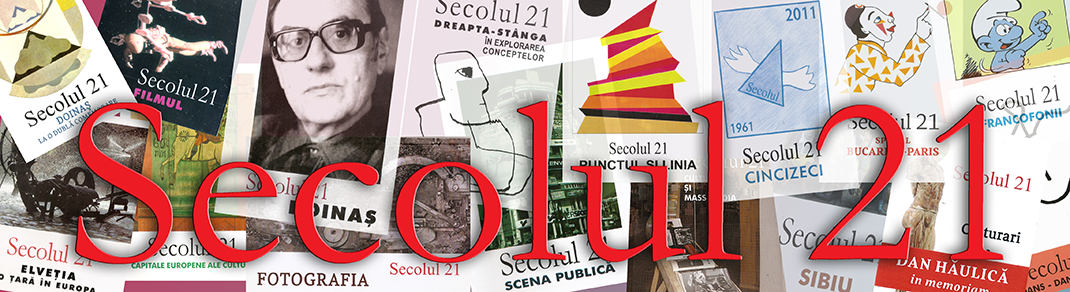
CC: I’d like to tell you two more things: recently, Secolul 21 published your 12 lectures given at Brown University. Sorin Istrail edited the project. The result is the most voluminous issue in the journal’s history: 530 pages!
SM: I’m glad. I remember fondly the editorial meetings at Secolul 21.
CC: In May this year, the first cohort of computer scientists from the Faculty of Mathematics celebrated their semi-centennial: in 1975, you turned 50, and 58 students graduated.
SM: Lovely, congratulations!
CC: A SMall volume will be published in which you’ll appear many times. Do you remember how many undergraduate theses you supervised in that cohort? And how many PhDs?
SM: More theses than PhDs…
CC: Correct: eight theses and two doctorates.
SM: You and Monica Tătaram.
CC: Always correct.
SM: Let’s not exaggerate…
CC: I end with great affection, beloved Professor. Good night!